Child health & medical record.
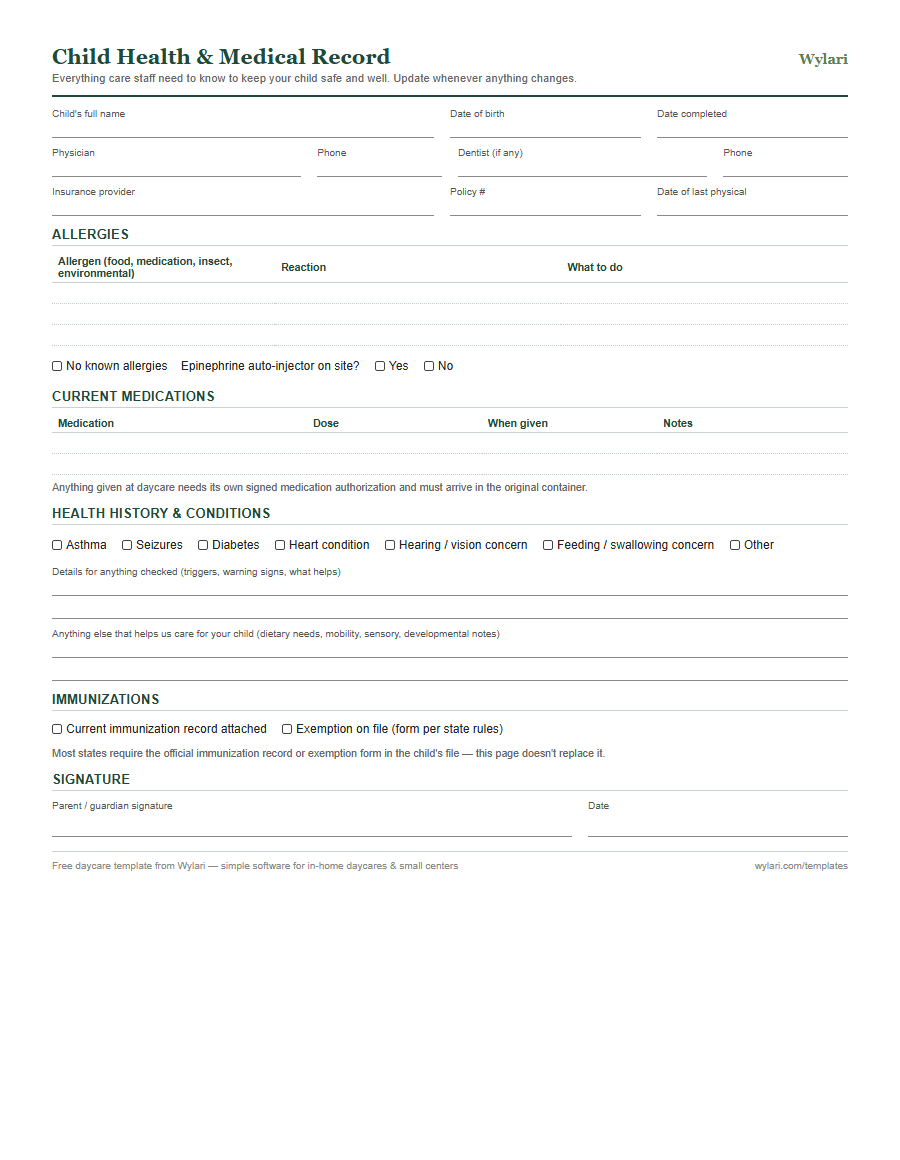
Allergies with reactions and what-to-do, current medications, conditions, physician and insurance details, and immunization tracking — a child's whole health picture on one page.
Not just what — what happens, and what to do.
"Allergic to peanuts" isn't enough information.
The difference between a form and a useful form is the columns after the allergen: what a reaction looks like for this child, and what you're supposed to do. "Hives around the mouth → antihistamine, call mom" and "throat swelling → EpiPen, 911" are different emergencies that a bare allergy list can't distinguish. That structure is the heart of this record.
- Have parents fill it with the pediatrician's words where they can — the triggers-and-warning-signs lines for asthma or seizures are most useful when they're specific, not "sometimes wheezes."
- Surface the critical facts elsewhere too. The record lives in the file; the allergy summary belongs where food is served and on the emergency contact sheet. A record nobody re-reads protects nobody.
- Update on change, not on schedule. New medication, outgrown allergy, new diagnosis — a quick line change with a fresh date keeps the "as of" honest. Annual re-signs catch whatever slipped through.
- Remember what this form isn't. The state immunization record and any medication-administration authorizations are separate, legally-specific documents — the checkboxes here track that they exist, not replace them.
Allergies your whole staff can't miss.
Wylari puts allergies and medical flags on the child's record where staff actually see them — at check-in, at meal time, and in every view that matters.
Start your free trial Join the beta — freeMore free templates: enrollment form, photo & media release, field trip permission slip — or see all twenty.